Zimbabwe takes its name from the dry-stone walls of Great Zimbabwe. This is the memory Dura is built on: the courts, the craft, the languages and the values that shaped the plateau, carried forward by the people photographing and filming it today.
A strong history, cast in stone and carried in song
Dura is built on Zimbabwe's own memory: the stone courts of Great Zimbabwe, the trade and craft of Munhumutapa, the kingdoms of the plateau, and the values that hold families and villages together. Every asset here belongs to that story, and is licensed with the respect it deserves.
11th - 15th century
Great Zimbabwe
Dzimba dzeMabwe, the houses of stone. A city of dry-stone walls raised without mortar, now a UNESCO World Heritage Site, and the origin of the country name.
15th - 17th century
Munhumutapa
The Munhumutapa empire traded gold, ivory and cloth with the Swahili coast, and its stone-walled courts shaped the craft and custom of the plateau.
19th century
Umthwakazi
The Ndebele kingdom of Mzilikazi and Lobengula settled the south-west, and Shona and Ndebele traditions stood their ground side by side.
1980 to today
A free Zimbabwe
Independence brought the flag we still raise, and a creative economy built on the same land, languages and memory.
Hunhu / Ubuntu
A person is a person through other people. Dignity, generosity and the community come before the individual.
Nhimbe / Ilima
Neighbours gather to work each other's fields in turn, and the harvest is shared so no household is left behind.
Mutupo
Totems name a clan and carry its praise poetry, its taboos, and the duty to protect the animals and land it honours.
Kuremekedza / Ukuhlonipha
Respect, above all for elders: the greetings, the handshake, and the way a young person speaks before a parent.
Midzimu / Amadlozi
The ancestors are named and remembered. To forget them is to lose the ground you stand on.
Mbira neNgoma
Mbira dzavadzimu, hosho and drums carry the history forward, and so do ngano folktales and tsumo proverbs told after dark.
Chara chimwe hachitswanyi inda.
One thumb cannot crush a louse. We carry this heritage together, and we pay for it fairly.
From the archive
The past, in its own photographs
Stone courts, carved birds and the kings of the plateau. These images are real photographs, prints and engravings held in public collections, and each one carries the credit of the person or archive that kept it.
c. 1900
The ruins, photographed a century ago
The granite walls were already centuries old when this photograph was made for the Carpenter Collection at the Library of Congress. Great Zimbabwe was the capital of a Shona kingdom that traded gold and ivory as far as the Swahili coast and Arabia, and its mortarless walls were raised from shaped granite blocks cut on the surrounding hills.
Frank and Frances Carpenter Collection, Library of Congress · Public domain · Source
1891 photograph
The soapstone birds
Eight carved birds stood on monoliths in the Hill Complex, each one a messenger between the living and the ancestors. Most were taken away during the colonial era; those that returned are kept at the Zimbabwe Museum of Human Sciences, and the bird now flies on the national flag. This plate comes from J. Theodore Bent's 1891 record of the ruins.
J. Theodore Bent, "The Ruined Cities of Mashonaland" (1891) · Public domain · Source
1975
A wall of the Great Enclosure
The Great Enclosure is the largest ancient structure south of the Sahara, its outer wall running some 250 metres and rising over 11 metres in places. Aart Rietveld photographed it for Leiden University in 1975, fifteen years before independence, when the site was already recognised as the country's founding monument.
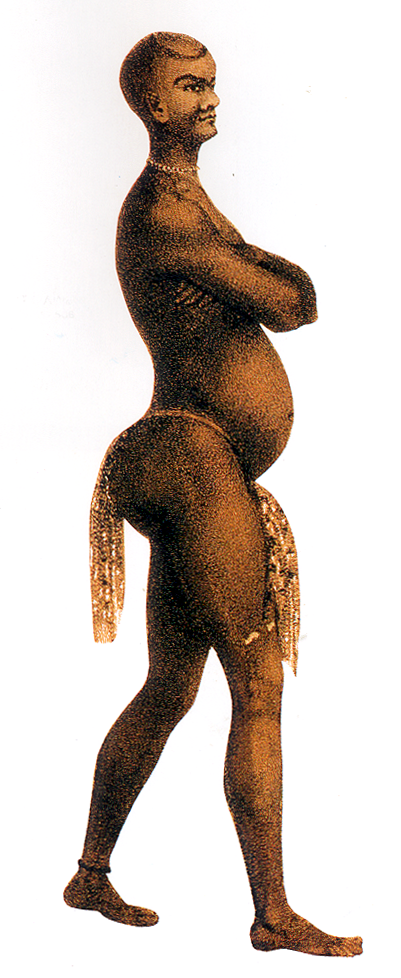
Mzilikazi kaMashobane led his people north across the Limpopo in the 1830s and settled the south-west of the plateau. This engraving is after a portrait by William Cornwallis Harris, who visited the king's kraal in 1836 and recorded the court, the regiments and the craft of the new kingdom.
After William Cornwallis Harris (1836) · Public domain · Source
c. 1890
Lobengula, the last Ndebele king
Lobengula succeeded his father Mzilikazi and ruled from Bulawayo until the 1893 war. Photographs of him were rare and carefully staged; in this one he wears the ceremonial dress of the royal house. His memory stays in the names of the city's streets and in the language, songs and regalia kept by Ndebele families today.
Historical portrait, public domain · Public domain · Source
Present day
The Conical Tower, standing
Inside the Great Enclosure the Conical Tower rises nearly 9 metres, solid and without mortar, thought to represent the granary where a community keeps its wealth. Photographs like this one, made in our own time, keep the stone city in front of the next generation of photographers and filmmakers.
Carvers, kings, dancers and coders. A few things worth knowing about the hands and history behind the work on these pages.
ArtistsFact 1 of 29
Carved out of one room
In 1957 the new National Gallery in Salisbury opened with Frank McEwen as its first director, and he set up a studio workshop for local carvers. Shona stone sculpture grew out of that room and is now collected worldwide.
Real work only
Real work only. Every asset on Dura is a real photograph, video or design made by a person, and it is checked by our review team before it goes live. AI-generated or synthetic imagery is not accepted.
 c. 1900